A bank is a financial institution that accepts deposits from the public and creates a demand deposit while simultaneously making loans, mobilizing saver surplus to deficit spenders. Lending activities can be directly performed by the bank or indirectly through capital markets.
Whereas banks play an important role in financial stability and the economy of a country, most jurisdictions exercise a high degree of regulation over banks. Most countries have institutionalized a system known as fractional-reserve banking, under which banks hold liquid assets equal to only a portion of their current liabilities. In addition to other regulations intended to ensure liquidity, banks are generally subject to minimum capital requirements based on an international set of capital standards, the Basel Accords. (Full article...)
A bank holding company is a company that controls one or more banks, but does not necessarily engage in banking itself. The compoundbancorp (banc/bank + corp[oration]) or bancorporation is often used to refer to such companies as well, particularly in the United States. (Full article...)
Image 2
1967 Letter from the Midland Bank to a customer, Mr. … , informing him on the introduction on electronic data processing and on account numbers for current accounts A bank account is a financial account maintained by a bank or other financial institution in which the financial transactions between the bank and a customer are recorded. Each financial institution sets the terms and conditions for each type of account it offers, which are classified in commonly understood types, such as deposit accounts, credit card accounts, current accounts, loan accounts or many other types of account. A customer may have more than one account. Once an account is opened, funds entrusted by the customer to the financial institution on deposit are recorded in the account designated by the customer. Funds can be withdrawn from the accounts in accordance with their terms and conditions.
The financial transactions which have occurred on a bank account within a given period of time are reported to the customer on a bank statement, and the balance of the accounts of a customer at any point in time represents their financial position with the institution.. (Full article...)
Image 3
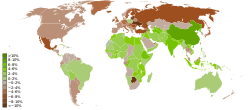
World map showing real GDP growth rates for 2009; countries in brown were in a recession.
The Great Recession was a period of market decline in economies around the world that occurred from late 2007 to mid-2009. The scale and timing of the recession varied from country to country (see map). At the time, the International Monetary Fund (IMF) concluded that it was the most severe economic and financial meltdown since the Great Depression.
The causes of the Great Recession include a combination of vulnerabilities that developed in the financial system, along with a series of triggering events that began with the bursting of the United States housing bubble in 2005–2012. When housing prices fell and homeowners began to abandon their mortgages, the value of mortgage-backed securities held by investment banks declined in 2007–2008, causing several to collapse or be bailed out in September 2008. This 2007–2008 phase was called the subprime mortgage crisis. (Full article...)
An advising bank (also known as a notifying bank) advises a beneficiary (exporter) that a letter of credit (L/C) opened by an issuing bank for an applicant (importer) is available. An advising bank's responsibility is to authenticate the letter of credit issued by the issuer to avoid fraud. The advising bank is not necessarily responsible for the payment of the credit which it advises the beneficiary of. The advising bank is usually located in the beneficiary's country. It can be (1) a branch office of the issuing bank or a correspondent bank, or (2) a bank appointed by the beneficiary. An important point is the beneficiary has to be comfortable with the advising bank.
In case (1), the issuing bank most often sends the L/C through its branch office or correspondent bank to avoid fraud. The branch office or the correspondent bank maintains specimen signature(s) on file where it may counter-check the signature(s) on the L/C, and it has a coding system (a secret test key) to distinguish a genuine L/C from a fraudulent one (authentication). (Full article...)
Other areas of ethical consumerism, such as fair trade labelling, have comprehensive codes and regulations which must be adhered to in order to be certified. Ethical banking has not developed to this point; because of this it is difficult to create a concrete definition that distinguishes ethical banks from conventional banks. Ethical banks are regulated by the same authorities as traditional banks and have to abide by the same rules. While there are differences between ethical banks, they do share a desire to uphold principles in the projects they finance, the most frequent including: transparency and social and/or environmental values. Ethical banks sometimes work with narrower profit margins than traditional ones, and therefore they may have few offices and operate mostly by phone, Internet, or mail. Ethical banking is considered one of several forms of alternative banking. (Full article...)
Image 8
The CAMELS rating is a supervisory rating system originally developed in the U.S. to classify a bank's overall condition. It is applied to every bank and credit union in the U.S. and is also implemented outside the U.S. by various banking supervisory regulators.
UML class diagram depicting a bank account A bank card is typically a plastic card issued by a bank to its clients that performs one or more of a number of services that relate to giving the client access to a bank account.
Physically, a bank card will usually have the client's name, the issuer's name, and a unique card number printed on it. It will have a magnetic strip on the back enabling various machines to read and access information. Depending on the issuing bank and the preferences of the client, this may allow the card to be used as an ATM card, enabling transactions at automated teller machines; or as a debit card, linked to the client's bank account and able to be used for making purchases at the point of sale with a bank card using a payment terminal. Later, in 2010s, smart card technology was adopted for bank card. (Full article...)
Image 10
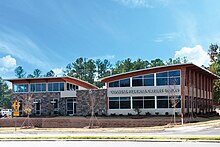
A branch of the Coastal Federal Credit Union in Raleigh, North Carolina
Worldwide, credit union systems vary significantly in their total assets and average institution asset size, ranging from volunteer operations with a handful of members to institutions with hundreds of thousands of members and assets worth billions of US dollars. In 2018, the number of members in credit unions worldwide was 375 million, with over 100 million members having been added since 2016. (Full article...)
JPMorgan Chase was created in 2000 by the merger of New York City banks J.P. Morgan & Co. and Chase Manhattan Company. Through its predecessors, the firm's early history can be traced to 1799, with the founding of what became the Manhattan Company. J.P. Morgan & Co. was founded in 1871 by the American financier J. P. Morgan, who launched the House of Morgan on 23 Wall Street as a national purveyor of commercial, investment, and private banking services. Today, the firm is a major provider of investment banking services, through corporate advisory, mergers and acquisitions, sales and trading, and public offerings. Their private banking franchise and asset management division are among the world's largest in terms of total assets. Its retail banking and credit card offerings are provided via the Chase brand in the U.S. and United Kingdom. (Full article...)
SMBC Group operates in retail, corporate, and investment banking segment worldwide. It provides financial products and services to a wide range of clients, including individuals, small and medium-sized enterprises, large corporations, financial institutions and public sector entities. It operates in over 40 countries and maintains a presence in all International Financial Centres as the 12th biggest bank in the world by total assets. It is one of the largest global financial institutions in project finance space by total loan value. It is headquartered in the Marunouchi neighborhood of Tokyo. (Full article...)
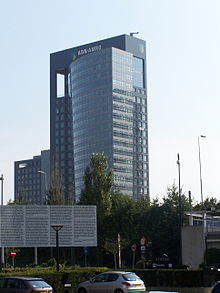
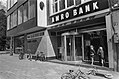
Following aggressive international expansion, ABN AMRO was acquired and broken up in 2007–2008 by a consortium of European banks, including Fortis which intended to take over its formed operations in the Benelux region. Fortis came under stress in the autumn of 2008, and was in turn broken up into separate national entities; the Dutch operations, namely Fortis Bank Nederland and the former ABN AMRO activities that Fortis had planned to absorb, were nationalized, restructured, and renamed ABN AMRO in mid-2010. On 20 November 2015, the Dutch government publicly re-listed the company through an IPO and sold 20 percent of the shares to the public. (Full article...)
Image 4
Danske Bank A/S (pronounced[ˈtænˀskəˈpɑŋˀk], lit.'Danish Bank') is a Danish multinational banking and financial services corporation. Headquartered in Copenhagen, it is the largest bank in Denmark and a major retail bank in the northern European region with over 5 million retail customers. Danske Bank was number 454 on the Fortune Global 500 list for 2011. The largest shareholder with 21% of the share capital is A.P. Moller Holding, the investment holding company of the Maersk family.
It was founded 5 October 1871 as Den Danske Landmandsbank, Hypothek- og Vexelbank i Kjøbenhavn ("The Danish Farmers' Bank, Mortgage and Exchange Bank of Copenhagen"), and was commonly known as Landmandsbanken ("the Farmers' Bank"). In 1976, the bank changed name to Den Danske Bank ("The Danish Bank"), and the current name was adopted in 2000. (Full article...)
ICBC became the world's largest bank by total assets in 2012 (based on year-end balance sheet) and has kept this rank ever since. It was ranked first on the Forbes Global 2000 list of the world's top public companies in 2015. On 31 December 2022, it was the third-largest bank in the world by market capitalization at $211 billion. It is one of the most profitable companies in the world, ranking fourth according to Forbes in 2022. It has been designated a systemically important bank by the Financial Stability Board (FSB) since the start of the FSB's listing. (Full article...)
It is a major financial institution that started in 1875 as a postal savings system, and that still today continues to operate primarily out of post office branches. It manages over ¥205 trillion of assets and offers services in almost 24,000 branches across Japan. At times in its history, it was the largest financial institution in the world. Since its conception, it has played a significant role in both making economic services to people in Japan and making investments towards the economic and industrial development of the country. (Full article...)
In 1986, the Bank of Communications was revived in the mainland as a commercial credit institution. It was listed on the Stock Exchange of Hong Kong in June 2005 and the Shanghai Stock Exchange in May 2007. The Bank was ranked No. 151 among the Fortune Global 500 in terms of operating income and No. 11 among the global top 1,000 banks in terms of Tier 1 capital rated by the London-based magazine The Banker. In 2023, the company was ranked 53rd in the Forbes Global 2000. (Full article...)
Did you know...
... that to raise funds for the Council of District Dumas, its chairman led an armed squad to storm the Moscow headquarters of the State Bank?
Image 4Statesman Jan van den Brink was instrumental in the merger of Amsterdamsche Bank and Rotterdamsche Bank in 1964, and remained on the bank's board until 1978 (from AMRO Bank)
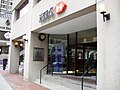
Image 5An HSBC Bank Canada branch in Toronto, 2008 (from HSBC Bank Canada)
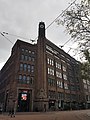
Image 6Rotterdam head office [nl], later repurposed as a shopping center (from AMRO Bank)
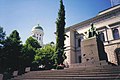
Image 7Government Palace in Helsinki, the Bank's home from 1824 until relocation to its current building in 1883 (from Bank of Finland)
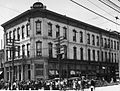
Image 18From 1867 to 1890 the bank was headquartered at 59 Yonge Street. This was the 1852 Ross, Mitchell & Co. Building, designed by William Thomas. (from Canadian Bank of Commerce)
Image 19This 15th-century painting depicts money-dealers at a banca (bench) during the Cleansing of the Temple. (from Bank)


![Image 1 A bank holding company is a company that controls one or more banks, but does not necessarily engage in banking itself. The compound bancorp (banc/bank + corp[oration]) or bancorporation is often used to refer to such companies as well, particularly in the United States. (Full article...)](http://upload.wikimedia.org/wikipedia/en/d/d2/Blank.png)













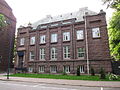
![Image 6Rotterdam head office [nl], later repurposed as a shopping center (from AMRO Bank)](http://upload.wikimedia.org/wikipedia/commons/thumb/d/db/Forum_Rotterdam_-_Rotterdamsche_Bank_2022_01.jpg/120px-Forum_Rotterdam_-_Rotterdamsche_Bank_2022_01.jpg)


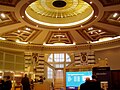
![Image 11Interior of the Helsinki Branch of the Vyborg-Bank [fi] in the 1910s (from Bank)](http://upload.wikimedia.org/wikipedia/commons/thumb/6/64/Pohjoismaiden_Osakepankin_Helsingin_sivukonttori.jpg/120px-Pohjoismaiden_Osakepankin_Helsingin_sivukonttori.jpg)


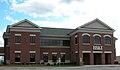
![Image 14Former branch [fi] in Tampere (from Bank of Finland)](http://upload.wikimedia.org/wikipedia/commons/thumb/0/00/Suomen_Pankin_talo_Tampere.jpg/120px-Suomen_Pankin_talo_Tampere.jpg)











![Image 37Sederholm House [fi] in Helsinki, the Bank's seat from 1819 to 1824 (from Bank of Finland)](http://upload.wikimedia.org/wikipedia/commons/thumb/8/83/Sederholmin_talo.jpg/120px-Sederholmin_talo.jpg)
![Image 38Helsinki head office extension designed by Harry W. Schreck [fi] in the late 1950s (from Bank of Finland)](http://upload.wikimedia.org/wikipedia/commons/thumb/b/b0/Bank_of_Finland%2C_Helsinki_-_DSC05358.JPG/120px-Bank_of_Finland%2C_Helsinki_-_DSC05358.JPG)