"The Sixties", as they are known in both scholarship and popular culture, is a term used by historians, journalists, and other objective academics; in some cases nostalgically to describe the counterculture and revolution in social norms about clothing, music, drugs, dress, formalities and schooling. Conservatives denounce the decade as one of irresponsible excess and flamboyance, and decay of social order. The decade was also labeled the Swinging Sixties because of the fall or relaxation of social taboos especially relating to racism and sexism that occurred during this time.
The 1960s became synonymous with the new, radical, and subversive events and trends of the period. In Africa the 1960s was a period of radical political change as 32 countries gained independence from their European colonial rulers.
Some commentators have seen in this era a classical Jungian nightmare cycle, where a rigid culture, unable to contain the demands for greater individual freedom, broke free of the social constraints of the previous age through extreme deviation from the norm. Christopher Booker charts the rise, success, fall/nightmare and explosion in the London scene of the 1960s. However, this alone does not explain the mass nature of the phenomenon.
Several nations such as the U.S., France, Germany and Britain turned to the left in the early and mid 1960s. In the United States, John F. Kennedy, a Keynesian and staunch anti-communist, pushed for social reforms. His assassination in 1963 was a stunning shock. Liberal reforms were finally passed under Lyndon B. Johnson including civil rights for African Americans and healthcare for the elderly and the poor. Despite his large-scale Great Society programs, Johnson was increasingly reviled by the New Left at home and abroad. The heavy-handed American role in the Vietnam War outraged student protestors across the globe, as they found peasant rebellion typified by Ho Chi Minh and Che Guevara more appealing. Italy formed its first left-of-center government in March 1962 with a coalition of Christian Democrats, Social Democrats, and moderate Republicans. Socialists joined the ruling block in December 1963. In Britain, the Labour Party gained power in 1964. In Brazil, João Goulart became president after Jânio Quadros resigned.
The late 1960s was a turbulent time for the club. The problems began when the club, under manager Dick Taylor, was relegated from the first tier of English football for the third time in 1967. Within two years, pressure from supporters led to the resignation of the board of directors. The club was then relegated to the Third Division. In the 1971–72 season, Aston Villa returned to the Second Division as champions with a record 70 points. In 1974 Ron Saunders was appointed manager, and by 1975 he led the club back into the First Division and into European competition. It continued to have much success under Saunders, winning the league in the 1980–81 season. Saunders' resignation halfway through the 1981–82 season came as a surprise, with the club in the quarter-final of the European Cup. He was replaced by his assistant manager Tony Barton who guided them to 1–0 victory over Bayern Munich in the European Cup final in Rotterdam. However, winning the cup marked a pinnacle, and the club fell steadily down the League standings over the next five years and was relegated in 1987. The club was promoted the following year, and achieved second place in the Football League in 1989 under manager Graham Taylor. (Full article...)
This is a Good article, an article that meets a core set of high editorial standards.
Singer Presents ... Elvis, commonly referred to as the '68 Comeback Special, is an Elvis Presley concert special that aired on NBC on December 3, 1968. It marked Presley's return to live performance after a seven-year period during which he focused on his film appearances.
The concert was initially planned as a Christmas special by the network and Presley's manager, Colonel Tom Parker. Producer Bob Finkel hired director Steve Binder, who, rather than creating a Christmas special, created a concert that would reflect the musical trends of the time and appeal to a younger audience. Filming took place in June 1968 at NBC Studios in Burbank, California. The special included a sit-down session that showcased Presley in an informal setting, surrounded by fans and a small band. (Full article...)
This is a Featured article, which represents some of the best content on English Wikipedia..
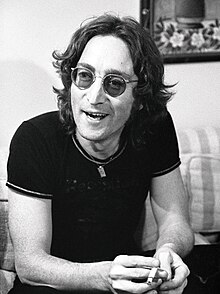
Lennon in 1974
John Winston Ono Lennon (born John Winston Lennon; 9 October 1940 – 8 December 1980) was an English singer-songwriter, musician and political activist. After a troubled childhood, he gained worldwide fame as the founder, co-lead vocalist and rhythm guitarist of the Beatles. His songwriting partnership with Paul McCartney remains the most successful in history.
Born in Liverpool, Lennon became involved in the skiffle craze as a teenager. In 1956, he formed the Quarrymen, which evolved into the Beatles in 1960. Lennon initially was the group's de facto leader, a role he gradually seemed to cede to McCartney. Through his songwriting in the Beatles, he embraced myriad musical influences, initially writing and co-writing rock and pop-orientated hit songs in the band's early years, then later incorporating experimental elements into his compositions in the latter half of the Beatles' career as his songs became known for their increasing innovation. Lennon soon expanded his work into other media by participating in numerous films, including How I Won the War, and authoring In His Own Write and A Spaniard in the Works, both collections of nonsense writings and line drawings. Starting with "All You Need Is Love", his songs were adopted as anthems by the anti-war movement and the counterculture of the 1960s. (Full article...)
This is a Good article, an article that meets a core set of high editorial standards.
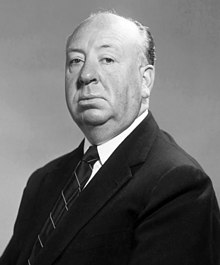
Hitchcock, c. 1960s
Sir Alfred Joseph Hitchcock (13 August 1899 – 29 April 1980) was an English film director. He is widely regarded as one of the most influential figures in the history of cinema. In a career spanning six decades, he directed over 50 feature films, many of which are still widely watched and studied today. Known as the "Master of Suspense", Hitchcock became as well known as any of his actors thanks to his many interviews, his cameo appearances in most of his films, and his hosting and producing the television anthology Alfred Hitchcock Presents (1955–65). His films garnered 46 Academy Award nominations, including six wins, although he never won the award for Best Director, despite five nominations.
... that in the 1960s Kléber Dupuy campaigned to rehabilitate the reputation of Philippe Pétain, against whose Vichy regime he had fought as a member of the French Resistance?
... that Patricia Davies and Jean Argles, two sisters who signed the Official Secrets Act as World War II codebreakers, did not find out about each other's top-secret work until the 1960s?




 Commons
 Wikibooks
 Wikidata
 Wikinews
 Wikiquote
 Wikisource
 Wikiversity
 Wiktionary


